Pipe Material Selection: The True Cost of Choosing on Price Alone
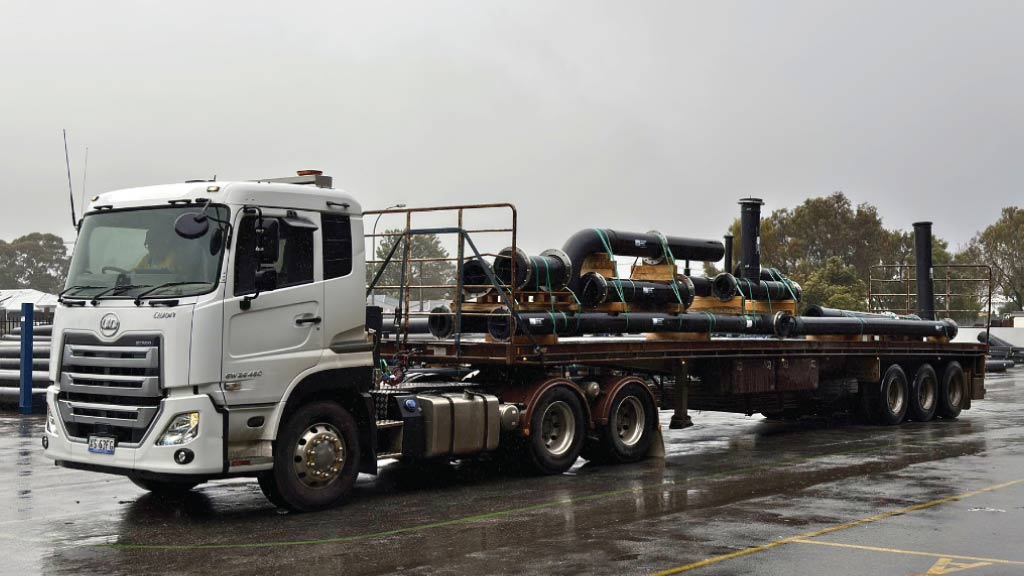
Pipe material selection is one of the easiest calls to get wrong, because the cheapest option almost always looks like the smartest one on the day the purchase order is signed. The saving is right there in the quote. The cost of getting it wrong is somewhere in the future, buried in a maintenance budget nobody is looking at yet. By the time it surfaces as a brittle line, a split elbow or a derated bend, the money saved up front has usually been spent several times over.
At Advanced Piping Systems, we see this play out across mining, water and industrial projects every year. The pattern is almost always the same. A material or a fitting is chosen on price, it survives the tender, and then the real operating environment quietly does its work. Below are three field lessons that show why pipe material selection is a whole-of-life decision, not a line item.
Why pipe material selection is really a cost decision
Every pipe on a project has two prices. There is the price on the invoice, and there is the total cost of ownership across the life of the asset: installation, downtime, maintenance, energy, and eventual replacement. Choosing the invoice price alone is like buying the cheapest tyres for a haul truck and being surprised when it fails under load.
Good pipe material selection considers the environment the system has to survive in. Ultraviolet exposure, chemical concentration, temperature, abrasion from slurry and tailings, ground movement and pressure surges all change the answer. A material that is perfectly fine for a short, shaded, low-pressure run can be entirely wrong for the same fluid in direct sun at higher pressure. The material has not changed. The conditions have.
Three field lessons in pipe material selection
1. When UV exposure turns a cost saving into a rebuild
A water utility supplying remote island communities had built its chemical dosing systems from PVC. It was cost-effective, easy to source and seemed like the sensible choice at the time. Then the systems started going brittle in the sun. Infrastructure that was meant to last for decades needed replacing far sooner than planned, on lines that supplied drinking water to communities with no easy backup.
The culprit was ultraviolet exposure. PVC left in direct sunlight is prone to photo-oxidation, which the Plastics Industry Pipe Association of Australia notes can cause a loss of impact strength and resistance to cracking over time. The fix was to rebuild the systems in HDPE, replicating the existing spooling from hand-drawn sketches into a 3D model and manufacturing it to tight tolerances. The result was a clean installation with no dimensional issues and no disruption to the water supply. You can read the full HDPE chemical dosing case study for the detail.
PVC is not a bad material. It is often specified on up-front cost rather than the environment it has to survive in, and UV exposure can change that calculation completely. If you want the broader comparison, we set it out in Why choose Poly Pipe over PVC.
2. Cheap elbows that split, restrict flow and burn pump power
The same trap catches fittings, not just pipe. Where a system needs a directional change, the difference between a quality moulded long-radius bend and a bargain imported elbow is easy to underestimate on a quote and painful to discover in the field.
Low-cost imported elbows are the ones we most often see failing on site. They can split and fail under duress, and their tighter geometry creates turbulence, restricts flow and makes pumps work harder to move the same volume. On slurry and tailings duties that turbulence also accelerates wear. For acids and aggressive chemicals, a poorly made fitting is effectively a time bomb waiting for the wrong operating day.
The alternative is straightforward: quality moulded 90 degree radius bends, available in long and short options, matched to the duty. They cost more up front, but they hold pressure, keep the flow smooth and stop pumps from chewing power to overcome a fitting that should never have been installed. That is pipe material selection working at the component level, where a small premium protects a much larger operating cost.
3. The cheaper bend that broke the standard
The last lesson is the most subtle, because on paper the cheaper option can look almost identical. On a recent coastal infrastructure project, a fabricated 90 degree bend was originally designed and priced by our team with three welded segments. A competing supplier won the work with a two-segment version at a lower price.
The geometry of a segmented bend affects its cost, as sharper angles require fewer welds. However, the PIPA POP006 guideline limits cut angles to a maximum of 15 degrees. While a compliant three-segment design utilised 15-degree cuts, a cheaper two-segment version employed a 22.5-degree cut angle, exceeding the limit and resulting in a reduced pressure class rating, effectively halving the pipe’s capacity. The client opted for the less expensive bend, which did not conform to the guidelines, often without clear communication of the trade-offs involved.
That last point is where these decisions quietly go wrong. “The problem is that purchasing decisions aren’t always made by the people who understand the consequences,” says Nathan Craig, CEO of Advanced Piping Systems. “A cut angle looks like a tiny detail on a drawing. In reality it decides whether the fitting is compliant and what pressure the whole line can safely run at.”
Some large operators have their specifications locked down and will not accept that kind of substitution. Many organisations simply do not know what to look for and need help to get it right. Fabricated fittings should always be specified and derated in line with recognised guidance, and the number of welds is not a cost to be trimmed. It is part of the pressure rating. Our prefabrication team builds to the design the duty requires.
How to get pipe material selection right the first time
The through-line in all three stories is that the cheapest option and the right option are rarely the same thing. Doing the job properly at the outset is seldom the cheapest choice up front, but it is usually the cheapest choice over the life of the asset. A few questions sharpen most decisions:
- What environment does it live in? UV exposure, temperature and weather can rule a material out before pressure is even considered.
- What is flowing through it? Chemical concentration, abrasion from slurry or tailings, and pressure surges all drive the choice between PVC, HDPE and lined options.
- How is it joined and fabricated? Fully welded HDPE systems avoid the weak points of mechanical joints, and fabricated bends must be derated correctly rather than value-engineered down.
- What is the total cost of ownership? Weigh installation, downtime, maintenance, pump energy and replacement, not just the invoice.
For a deeper primer on why polyethylene performs the way it does, our guide on what poly pipe is is a useful starting point, and the PIPA POP guidelines remain the authoritative industry reference for design and installation.
The bottom line
Sound pipe material selection is not about always buying the most expensive product. It is about matching the material and the fabrication to the conditions the system has to survive, so the asset performs for its full design life instead of being rebuilt years too early. Cheap PVC in the sun, a bargain elbow on a slurry line and a bend with one fewer weld all pass the tender. They just fail the environment.
“PVC and cheap fittings aren’t bad in themselves. They’re just often specified on upfront cost rather than the environment they have to survive in,” says Nathan Craig, CEO of Advanced Piping Systems. “Some operators have their specs sorted. A lot of others simply don’t know what’s what, and that is where we can help.”
If you are specifying pipe and want a straight answer on the right material and fabrication for the job, talk to Advanced Piping Systems. We would rather help you get it right the first time than fix it after the fact.

