What’s the Big Deal About the Quality of Your Fittings
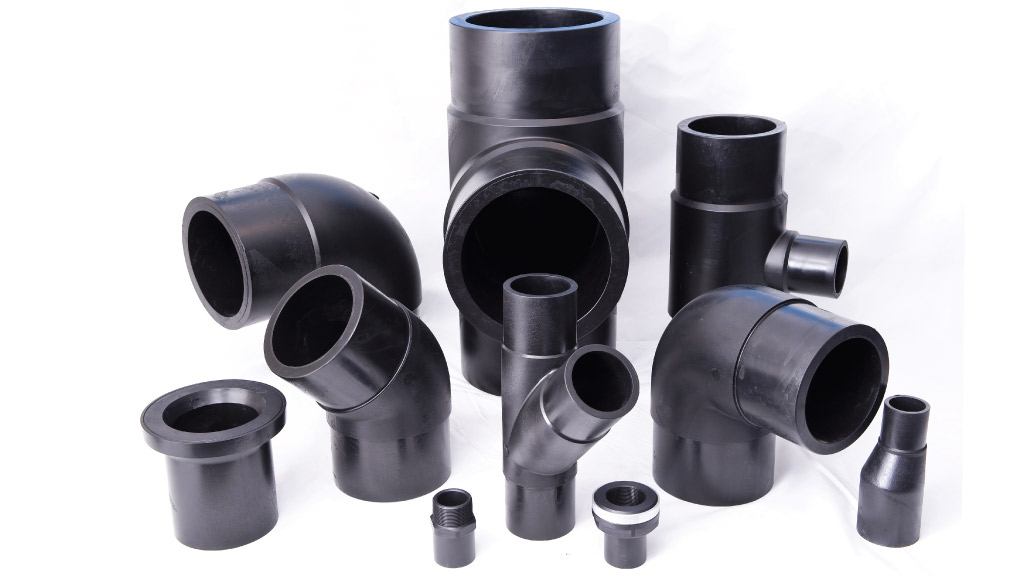
Ever Wondered About the Quality of Your Fittings?
The quality of your HDPE fittings isn’t something you’ll be thinking about when you’re fixing a breakdown: your concern is just to get the job done, get the flow back up and going again. It’s only when it comes to maintenance that you can afford to consider quality.
Depending on what your pipeline is transporting, the quality of your industrial pipe fittings is a big deal. This article isn’t just about whether you buy Chinese or European manufactured parts. It’s also about whether or not you have the skills to assess the quality of your fittings and what you deploy.
This article explains why quality is important. It tells you how you can assess the quality of your fittings / components, and explains how to make sure you’re consistently getting the best from your supplier.
The Difference is in the Reinforcing and Testing!
How do you assess HDPE fitting quality?
Three things to look at include reinforcing, testing and recall practice. Reinforcing should be visible. Deeper, more substantial ribbing around the fitting body, not a shallow pimple-effect on the surface. Testing should be documented batch-by-batch by the manufacturer, not just an initial sample run at the start of production. Recall practice tells you the rest. Manufacturers with rigorous testing actually identify defects and recall products. Manufacturers who never recall aren’t usually doing so because their product is perfect. The sections below explain each of these in detail.
A quality of your fittings mark is how often the manufacturers test the products. You might say, ‘Oh, they’re all tested’, and you’d be right! But what is the testing program, in reality?
If you have a cheap manufactured fitting in your left hand and a European-manufactured fitting in your right hand, they will initially look the same. The difference you feel at this point is that the European-manufactured fitting costs you significantly more.
The truth is, you can’t beat the prices on cheaper manufactured fittings. That’s just a fact!
But if you were to look closely, you’d notice that the European fittings have a lot more reinforcing than the other cheaper manufactured fittings. You can spot it by noticing that the cheaper manufactured fittings have very shallow reinforcing; it’s more like a pimple-effect on the surface.
The reinforcing matters; in some industries, particularly where your pipeline is carrying dangerous or hazardous substances, it’s critical.
The thing you can’t see is the testing.
It Only Takes One Failure to Put You out of Business
Stay with me for a moment; I’ll tell you a story.
One day I went to visit a customer of ours. While I was there, he took me through his warehouse and showed me the stock of his products (made by a cheaper manufacturer).
It looked ok. In fact, the product was probably sufficient for irrigation, and even some mining.
Picking one up, I asked him, ‘What happens now, if you use this to transport sulphuric acid, and it fails?’
He looked at me, unconcerned. ‘We wouldn’t do that very often.’
Putting the part down, I replied: ‘You only need it to happen once.’ The implication is that if you know that you can prevent splits in situations of hazardous substances, and you don’t, then the legal issues afterwards could be enough to shut your business down.
We have had cheaper fittings split, and I’ve seen them personally. This is where the testing programs of the manufacturers become so critical.
Assess Quality Based on Testing and Recall
Your supplier will be able to explain to you how their manufacturers test – and, worst-case scenario, recall their products. But here’s a quick (and very general) overview.
Cheaper manufacturers will do some initial testing on their products. Their production is powered by volume. They don’t do regular batch testing because it slows down their manufacturing rate and increases the product’s price. You have no guarantee about how each batch performs.
European manufacturers, on the other hand, test every batch. Their production volume is slower, the product prices are higher, and you can guarantee each batch’s performance.
Here at Advanced Piping Solutions, we’ve had European manufacturers recall products that we had already received. In some cases, they have been so pedantic about the recall that they wouldn’t provide refunds until we gave them evidence that the products had been destroyed.
The fact that we have never received a recall from a cheaper manufacturer does mean that their product is better. It means that their testing is worse.
| Quality factor | Cheaper manufactured fittings | European manufactured fittings |
| Reinforcing | Shallow, “pimple-effect” surface | Deeper, more substantial reinforcing |
| Initial cost | Lower | Higher |
| Initial testing | Yes, sample run at start of production | Yes |
| Batch testing | Not regular, would slow production | Every batch tested |
| Production volume | High, volume-driven | Slower, testing-driven |
| Performance guarantee | No guarantee batch-to-batch | Consistent performance guaranteed per batch |
| Recall practice | Rare to non-existent | Active, products recalled when defects identified |
| Fit for purpose | Irrigation, some mining | High-stakes pipelines including hazardous substances |
Work With Your Supplier to Better Understand the Quality of Your Fittings
Your supplier ought to be able to give you many more stories and examples of the differences in quality of your fittings, and should be able to teach you how to spot the quality yourself.
Ultimately, the quality of your fittings contributes to the safety and longevity of your pipeline. The cheapest fitting on the day of install is rarely the cheapest fitting over the life of the system and one failure on the wrong fluid is enough to put a business in serious strife.
When you need focused help fast, get it from a supplier whose success is keeping your plant moving. Call us today on 1300 362 229 or contact us via the website.
Frequently asked questions
What Australian standards apply to HDPE fittings?
The governing standard for fittings is AS/NZS 4129 (fittings for polyethylene pipes for pressure applications), which covers material, dimensions, marking, and testing requirements. AS/NZS 4130 covers the pipe itself. For potable water contact, AS/NZS 4020 applies. WaterMark certification and StandardsMark accreditation indicate a manufacturer has been independently audited against these standards.
How can I verify a manufacturer’s testing program?
Ask your supplier for the manufacturer’s batch test certificates, third-party certifications (WaterMark, StandardsMark), and any recent recall notices. A reputable manufacturer will provide these on request. If a supplier can’t supply documentation for the fittings they’re selling you, that’s a red flag.
Are all HDPE fittings the same as long as they’re PE100?
No. PE100 refers to the raw material grade but the way the fitting is manufactured, reinforced and tested varies significantly between manufacturers. Two PE100-grade fittings from different manufacturers can perform very differently in service, particularly under sustained pressure, surge or chemical exposure.
Do cheaper HDPE fittings ever make sense?
For low-risk applications (non-pressure irrigation, low-consequence sites) yes, cheaper fittings can be fit for purpose. The decision turns on what’s flowing through the pipeline and what happens if a fitting fails. For potable water, hazardous substances, or any pipeline where a failure causes downtime, environmental damage, or legal exposure, the upfront cost saving rarely pays off.
What’s the difference between butt fusion and electrofusion fittings for quality assessment?
Both jointing methods rely on the fitting’s manufacturing quality and the operator’s skill. Electrofusion fittings carry an embedded heating coil and a barcode that auto-loads the weld parameters — quality control is partly built into the fitting itself. Butt fusion relies more on operator technique and machine calibration.

