The Benefits of Using HDPE Pipe in Civil and Infrastructure Projects
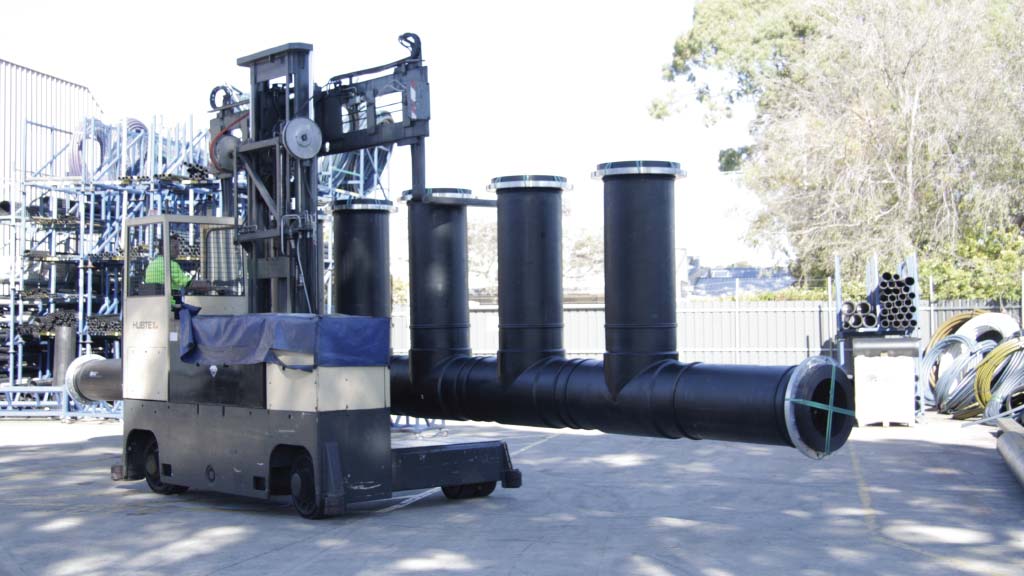
Civil infrastructure projects are essential for our cities. From potable water and wastewater systems to gas and telecommunications — even underground beer transportation in Belgium — HDPE pipes are now the preferred pipe material in many civil infrastructure projects and applications across the globe.
In Australia, plastic pipes are standard in telecommunications, sewage reticulation, irrigation, and gas transmission, and, according to the Intelligent Water Decisions Research Group at the University of Adelaide, make up around 85 per cent of the water services-related infrastructure in Australia’s cities.
PE100 is also the standard in the City of London. Between 2005 and 2010, the City of London had renovated or replaced approximately 17,000 km of water mains using PE100. Advanced Piping Systems has supplied HDPE for similar critical-infrastructure projects across Australia and the Pacific, including bringing safe drinking water to Kiribati.
Their popularity in municipalities is thanks to a range of benefits that far outstrip almost any other pipe available.
Why HDPE is the preferred material for civil infrastructure projects
Why is HDPE used in civil infrastructure projects?
HDPE pipelines have become the default choice for water, wastewater, gas and telecommunications infrastructure for four reasons:
- A design life that exceeds 100 years under normal service conditions
- Far better resilience than rigid materials in earthquake and ground-movement events
- Fully welded joints that don’t leak the way concrete or rubber ring-jointed systems do
- Resistance to corrosion, scaling, chemical attack and UV that metallic and other plastic pipes don’t match
The sections below cover each in detail, with real-world examples from Christchurch, Perth, City of London and Aberdeen, Idaho.
PE100 pipe has a 100+ year life expectancy
The latest generation PE100 materials have a lifetime of well over 100 years, if they are installed correctly and normal service conditions are adhered to.
However, you may have noticed that manufacturers claim the life expectancy to be far lower.
This is because they can only advertise a 50-year lifetime, due to a design standard from the PE100 Association.
This standard specifies a 50-year Minimum Required Stress of 10 MPa. The actual strength of the material is therefore far in excess of this minimum, when it is being used under normal conditions.
By advertising just the standards, manufacturers know that they are compliant and can prove it, by virtue of accepted testing.
Research currently being conducted by the University of Adelaide’s engineering school also qualifies the long average life expectancy of plastic pipes, and verifies that if a plastic pipe is to fail, it isn’t because of its age.
According to one researcher, the typical causes for premature failures in plastic pipes are improper installation practices, manufacturing defects, rock impingement and excessive bending at fittings.
PE100 pipe is resilient, especially in earthquake zones
PE100 pipe is far more resilient than PVC and concrete, especially in earthquake zones.
In 2010-11, after each of the six major earthquakes in Christchurch, New Zealand, a team of researchers assessed the extent of damage to infrastructure and buildings as a result of liquefaction and displacement.
They discovered that the wastewater pipe network was so badly damaged, they predicted it would take three years to fully recover the system.
The potable water system, in contrast, was quickly restored.
Why?
Almost half of the pipes that failed in Christchurch were constructed from asbestos cement (AC), with the remainder constructed from PVC. The sub-mains network predominantly consisted of polyethylene (PE) pipes and galvanised iron (GI).
Analysis showed that PE and PVC pipes suffered significantly less damage than AC, steel, GI or other types of materials. (See our full comparison of poly pipe versus PVC.)
“…a significant difference in the performance of different pipe materials was found, with the PE and PVC pipes showing much better performance than pipes of other materials.”1
Back in Australia, polyethylene slurry pipes are used in Western Australia because of their high abrasion resistance when compared to all other pipe materials. Even where steel pipes are used — such as in high pressure pipelines — the pipes are lined with PE.
And in Perth, PE100 with high stress-crack resistance was specified by the Water Corporation for the construction of a recent recharge pipeline, to maximise the lifetime of the asset.
PE100 pipe resists corrosion, chemicals and UV
Polyethylene resists corrosion, scaling and chemical attack, so it will not rust or tuberculate the way metal mains do. It also carries drinking water, wastewater and aggressive process chemicals with equal ease. Its fully fused joints are as strong as the pipe itself. It is flexible and ductile, absorbing ground movement, water hammer and settlement without cracking.
Poly pipe is also a fraction of the weight of steel or ductile iron, which speeds handling, lowers plant requirements and reduces installation cost. Manufactured black with carbon black pigment, it shrugs off the same UV exposure that embrittles other plastics, and with a design life commonly measured at 50 to 100 years, it is easy to see why municipalities keep specifying it over the alternatives.
Additional benefits of PE100 pipe
In addition to its resilience and long life expectancy, PE100 pipe offers a range of installation and construction advantages that suit large-scale HDPE pipeline construction projects.
Its flexibility and toughness make it particularly well suited for horizontal directional drilling, which is why it was chosen for the Perth pipeline.
Its welds are completely sealed, which means that PE100 joints don’t suffer the leakage problems commonly found in concrete and rubber ring-jointed systems.
It does not corrode, which is why it is used to line pipes constructed from other materials, such as galvanised iron or steel.
It is ideal for trenchless technologies, which contribute to increased efficiency, and reduced costs and disruptions that are commonly found in installation, replacement, or rehabilitation processes.
It is lightweight and it reduces the number of joints needed, which also reduces installation time and labour requirements. For projects that require transitions to other materials, see our guide to adaptations for HDPE pipe.
Since undertaking a major makeover of their municipal water system by switching to PE Pipe, the town of Aberdeen, a small community of 2000 people in Idaho, USA, has experienced the benefits HDPE pipe offers, first hand.
In 2003, more than 12 miles of PE pipe were used to replace aging, corroded cast iron and ductile iron pipes in a residential setting. In total, Aberdeen had 60,000 feet of PE installed.
“We found that the process of installing PE was less time consuming than installation of PVC or metal pipe,” said Cliff Cox, the main installer.
“If all conditions are the same, we can install 1000 feet of PE in one hour versus seven hours for PVC or concrete pipe,” he added.
PE pipe is fused together at the joints, creating a strong and flexible pipe that is virtually leak proof.
“When installed correctly, PE is leak free and the best solution for conserving water,” said Cliff.
If you need advice about the best type of pipe for your civil or infrastructure project, speak to Advanced Piping Systems today.
We measure our success in keeping your efficiency high, and your costs down
References
1: Cubrinovski, Misko, Duncan Henderson, and B. A. Bradley. “Liquefaction impacts in residential areas in the 2010-2011 Christchurch earthquakes.” (2012).
Frequently asked questions
What is HDPE pipe made from?
HDPE (high-density polyethylene) pipe is made from a thermoplastic polymer derived primarily from ethylene. The PE100 grade used in civil infrastructure is a high-density resin engineered for pressure pipe applications, with the “100” referring to its Minimum Required Strength of 10 MPa at 50 years. PE100 RC (Rapid Crack Resistant) is a variant with additional resistance to slow crack growth, used for trenchless installation and rocky ground conditions.
Which Australian standards apply to HDPE for civil and infrastructure projects?
The key standards are AS/NZS 4130 (polyethylene pipes for pressure applications), AS/NZS 4129 (fittings for polyethylene pipes), AS/NZS 4020 (products for use in contact with drinking water) and AS/NZS 2033 (installation of polyethylene pipe systems). For gas pipelines, AS 2885 also applies.
What diameter ranges are available for HDPE civil engineering pipes?
HDPE pipe is manufactured in diameters from 20 mm up to 1600 mm or larger, covering everything from small service connections through to large-diameter transmission mains, sewer rising mains and outfall pipelines.
How is HDPE pipe joined for civil infrastructure projects?
HDPE uses fully welded joints rather than mechanical connections. The main methods are butt fusion (heat-welding two pipe ends together), electrofusion (using a fitting with embedded heating coils) and flanged connections (stub flange and backing ring assemblies) where transition to other materials is needed. All three create leak-proof joints that don’t rely on gaskets or solvents.
Is HDPE suitable for trenchless installation?
Yes, HDPE is the standard material for horizontal directional drilling (HDD), pipe bursting, slip-lining and other trenchless methods. Its flexibility, light weight and fully welded leak-proof joints make it ideally suited for being pulled through bores or inserted into existing pipelines. The Perth groundwater replenishment pipeline referenced above is a HDD project.

