Valve Material Selection: One Weak Component Undoes a Whole System
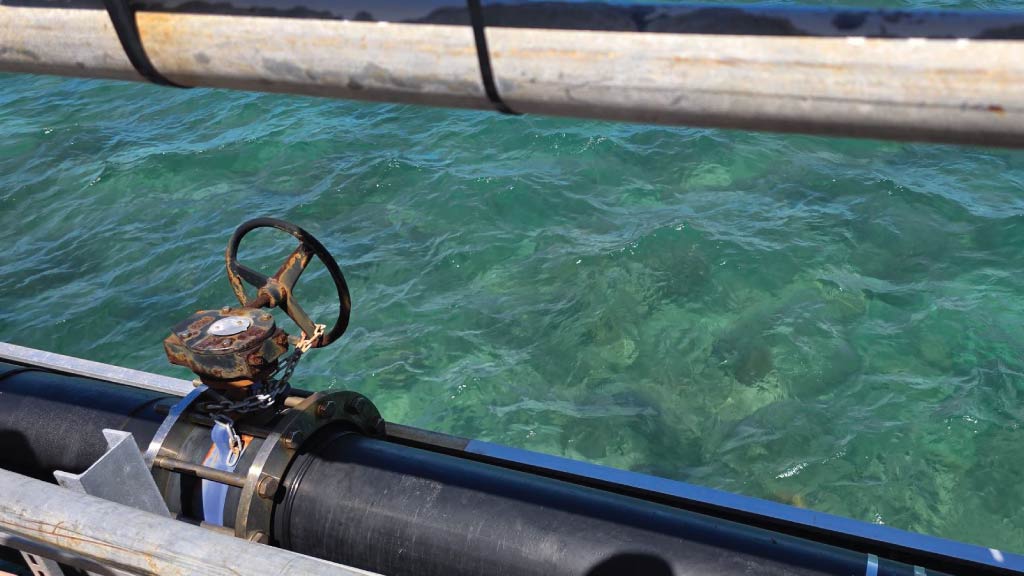
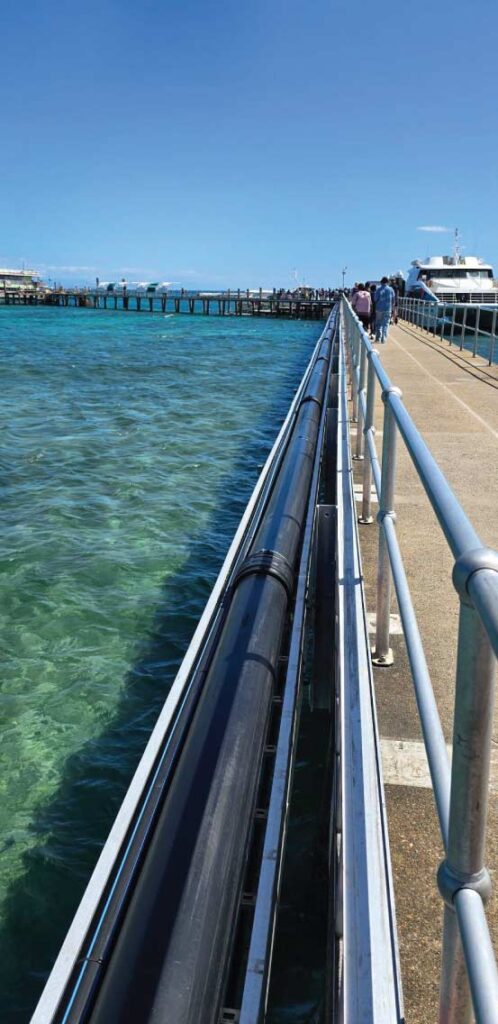
On a jetty at an island ferry terminal, a sewerage and waste pump-out line runs out over some of the clearest water you’ll ever see. The pipe is HDPE. The flanges are 316 stainless. Someone clearly thought hard about durability, and then bolted a standard epoxy-coated cast-iron valve into the middle of it. Look closely, and it is already corroding. This is a valve material selection failure, and is exactly the kind that quietly undoes an otherwise excellent system.
A system that was specified to last
Almost everything about this installation was right. HDPE is UV-stable, chemically inert, and effectively immune to the salt air that eats away at less suitable materials, which is why it is the sensible choice for a marine pump-out line. Our guide on why poly pipe beats PVC explains why polyethylene handles coastal exposure so well, and a similar logic drove the island water treatment upgrade in our HDPE chemical dosing case study.
The 316 stainless flanges were the right call, too. Grade 316 is the recognised marine standard because its molybdenum content resists chloride attack, the mechanism behind most saltwater corrosion. The bones of this system were specified to survive decades in a harsh environment. Which makes the valve so frustrating.
Where the valve material selection let it down
The valve is standard epoxy coated cast iron. In a marine splash zone, that is a mismatch with everything around it. An epoxy coating only protects while it stays perfectly intact. One chip during installation, one scratch, one gap around a bolt hole, and salt-laden moisture gets underneath. From there the cast iron rusts, the corrosion spreads under the coating, and the valve slowly loses both function and integrity. You can already see it starting on the handwheel and body in the photo.
The Australian Stainless Steel Development Association advises grade 316 as a minimum within five kilometres of the surf, and notes that critical splash zones can call for even higher grades. A pump-out valve sitting metres above open seawater is about as clear a case as you will find. This should have been a 316 stainless valve, matched to the flanges and the pipe it connects. The cast iron valve was almost certainly cheaper on the day it was ordered. That is usually how these decisions happen.
The weakest link costs far more than the valve
A piping system is only as durable as its least suitable component. Here the HDPE and the 316 flanges could comfortably outlast the valve by decades, but the whole assembly will now be defined by the part that fails first. When a valve seizes or leaks on a waste line at a public ferry terminal, the consequences are not limited to the price of a replacement. You are looking at downtime, an awkward and costly repair in an over-water location that is hard to access, and the real risk of a spill into pristine, high-visibility water.
Set against that, the saving on a cheaper valve is trivial. This is the same fit-for-purpose principle we covered in our piece on pipe material selection: the right answer is rarely the cheapest line on the quote, and the true cost only shows up over the life of the asset.
Getting valve material selection right in marine environments
The lesson is not complicated. Match every exposed and wetted component to the environment, not just the headline items:
- Specify to the environment, not the invoice. In coastal and marine settings, 316 stainless should be the minimum for valves, fasteners and fittings, with duplex or higher grades considered for severe splash zones.
- Do not let a substitution slip through. A 316 valve quietly swapped for a coated cast iron one to shave a purchase order is a false economy. Lock critical materials into the specification.
- Watch galvanic pairing. Mixing dissimilar metals in a wet, salty environment can accelerate corrosion, so components should be compatible as a set.
- Plan for washdown and access. Where possible, allow rainfall or maintenance to rinse salt away, and make sure critical valves can actually be reached and serviced.
Final note
The pipe was right. The flanges were right. One component let the whole thing down. Sound valve material selection simply means the weakest part in the system is still fit for the conditions it has to face. If you are specifying an HDPE system for a coastal or marine site and want the valves, flanges and fittings matched properly from the start, talk to our team. It is a far better use of the budget than replacing a corroded valve over open water.

