Back to Basics: Putting Backing Rings to the Test
Backing Rings: A Test for Quality you can Trust
Henry Ford, famous American industrialist, innovator, and business magnate, once said: “Quality means doing it right when no one is looking”.What is a backing ring?
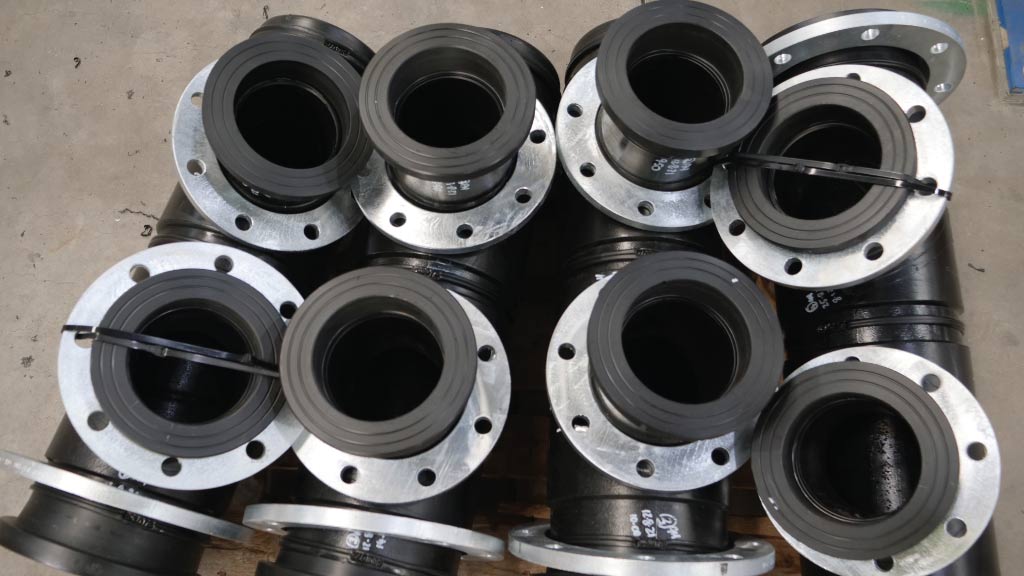
A backing ring is the metal flange that clamps behind a stub flange to form a flanged joint on the HDPE pipe. The stub flange is welded (butt-fused) onto the end of the poly pipe itself, and the ring sits behind it, taking the bolt load when the joint is torqued up. Together, this assembly lets HDPE pipe connect to valves, pumps, tanks, and other flanged equipment (without the ring, there’s no way to bolt the joint down evenly). These rings are typically manufactured from galvanised or stainless steel, and they don’t touch the fluid inside the line, the poly stub flange face does. But if the ring fails, the joint fails. That’s why they matter. These words remain as relevant as ever and are the driving force for Advanced Piping Systems’ new inspection, verification, and testing process. Developed by our Quality Control Officer, David Evans, who has more than 30 years of experience in manufacturing and fabrication, this process ensures our imported products comply not only with country standards but also with our own rigorous standards. The first products David put to the test through our new process were some imported galvanised steel rings sourced from a new overseas supplier. As an essential component of any HDPE flange assembly, we ensured that the backing rings were of consistent, measurable quality and had the required strength for use. The first step in the inspection, verification, and testing process involved requesting a trial quantity of the galvanised steel backing rings from our supplier, along with the material certificate stating the product’s composition. “Once I received the sample batch of rings and their certificates, the first thing I did was check the physical dimensions of the product, then ensured that it was coded and marked correctly,” David said. Then, once the backing rings’ physical appearance had been inspected, a sample of the rings, along with material certificates, was sent to an independent verifier to check the material composition. David was pleased to learn that the selected rings all passed the verification process – which meant the team could undertake the third and final step of the process: developing batch testing for subsequent purchase orders. Batch testing is used to identify whether the received batch of backing rings are of an acceptable quality to be used for fabrication. This is the same principle that drove our earlier look at the quality of HDPE fittings from different manufacturers, quality isn’t visible until you look for it.| Stage | Typical importer process | Our inspection, verification, and testing process |
| Initial sample check | Yes, physical inspection of a sample | Yes, physical inspection of a trial quantity + material certificate check |
| Independent material verification | Rarely, usually relies on supplier’s certificate | Yes, sample sent to an independent verifier to confirm composition |
| Batch testing on subsequent orders | No, one-off sample check only | Yes, AQL-based batch testing for every purchase order |
| Dimensional and marking checks | Sometimes | Yes, dimensions, coding, and marking checked against spec |
| Result | Confidence in first batch only | Confidence in every batch, ongoing |

